Outdoor Surfaces Built for Daily Use
Residential Paver Services in Tampa for properties where hardscape appearance and function directly affect outdoor usability
Bay Brick Pavers plans and installs residential paver projects across Tampa, Citrus Park, Brandon, and surrounding areas, working from the property layout, intended use, and material characteristics to create stable outdoor surfaces. Homeowners turn to this service when a driveway needs replacement, a backyard patio would extend living space, or a pool deck requires an upgrade that handles Florida's heat and rain exposure. Each project begins with an on-site evaluation and elevation check that accounts for drainage slope, existing landscaping, traffic patterns, and whether the surface will support vehicles, foot traffic, or poolside furniture.
The scope includes driveways, patios, pool decks, walkways, retaining walls, and fire pits, along with repairs to surfaces showing settlement or shifting. Material selection—concrete pavers, clay brick, travertine, or porcelain—affects color retention under sun exposure, surface texture around water, and how the pattern complements architectural style. Layout decisions determine whether a herringbone pattern provides strength for a driveway or a running bond creates clean sightlines along a walkway.
Schedule an on-site consultation to review your property's outdoor hardscape needs and material options.
How Material and Layout Shape Long-Term Performance
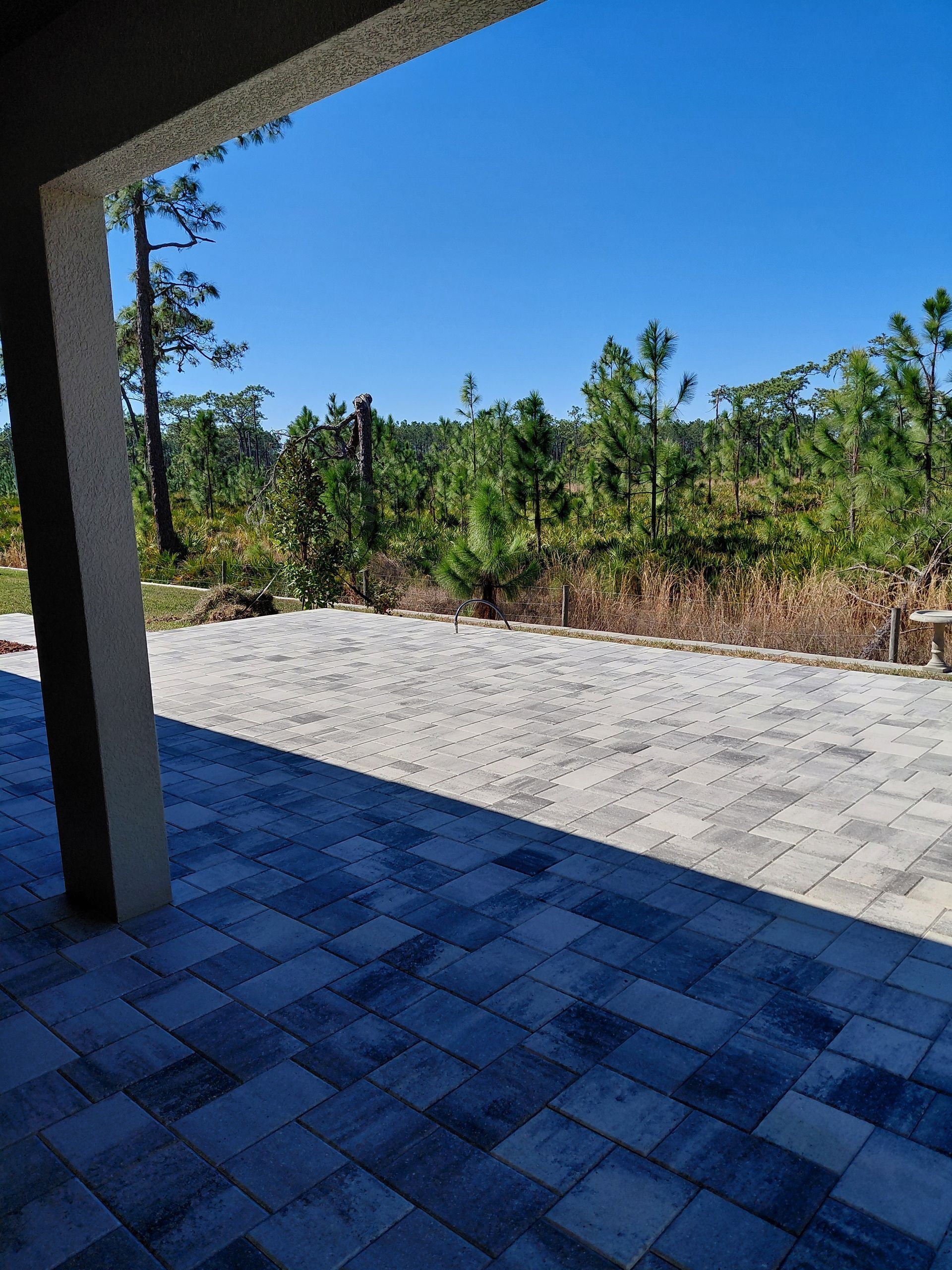
Base preparation depth and compaction directly influence whether pavers remain level through seasonal rain and root expansion common in Tampa's climate. The installation process involves excavating to the required depth, establishing proper slope for water runoff, layering and compacting base material, setting edge restraints, placing pavers in the specified pattern, and locking units together to resist weed intrusion.
After completion, you'll notice defined borders that separate hardscape from planting beds, a surface that sheds water without puddling, and a finished appearance that changes the visual balance of the yard. Driveways support vehicle weight without rutting, patios provide stable footing for outdoor furniture, and walkways create intentional paths that reduce wear on lawn areas.
The finished project includes edge restraint installation to prevent lateral movement, joint stabilization, and a surface cleaned of installation debris. Color and pattern selections made during planning become permanent features that either coordinate with or contrast against siding, roofing, and landscape plantings.
Questions Homeowners Ask Before Starting
Residential paver projects vary widely depending on whether the goal is a front entry upgrade, backyard entertainment space, or functional driveway replacement, and understanding the process helps homeowners make informed material and layout decisions.
What determines which paver material works best for a specific application?
The choice depends on whether the surface will bear vehicle weight, remain wet from pool splash-out, or receive direct afternoon sun in Tampa's climate—concrete and travertine pavers offer cost efficiency and color variety, clay brick provides traditional appearance and high compressive strength, and porcelain resists staining and offers contemporary finishes.
How does proper base preparation prevent future settling or unevenness?
Excavation to the correct depth, placement of compacted aggregate base, and establishment of drainage slope create a stable foundation that distributes load and channels water away from the paver surface, reducing the risk of low spots that collect standing water or high spots that create tripping hazards.
What's the difference between new installation and upgrading an existing patio or walkway?
New installations start with site grading and base construction, while upgrades may involve removing old pavers, recompacting the base, and installing new units, or in some cases, adding pavers to expand the footprint of an existing area.
When is the best time to schedule a paver installation project?
Dry months allow for more predictable base compaction and joint sand placement, though projects can proceed year-round with adjustments for Tampa's afternoon storm patterns and seasonal ground moisture levels.
How does pattern choice affect the finished appearance and structural performance?
Herringbone patterns provide interlock that resists shifting under vehicle turning forces, running bond creates linear sightlines suited to walkways, and basketweave or circular layouts add visual interest to patio spaces where structural load is lighter.
Bay Brick Pavers evaluates your property's grading, existing drainage, and intended use to recommend materials and layouts that align with your outdoor goals. Request an on-site project consultation to review specific hardscape possibilities for your Tampa home.