Poolside Surfaces Designed for Exposure and Use
Pool Decks in Tampa for properties where a backyard pool requires a functional, attractive surrounding surface built for Florida conditions
A pool deck handles constant water exposure, barefoot traffic, furniture weight, and year-round sun that would degrade lesser materials within a few seasons. Bay Brick Pavers installs paver pool decks tailored to each backyard's layout, coordinating color, pattern, texture, and material selection with the pool shape, landscape plantings, and architectural style of the home. The service covers new installations around recently built pools and upgrades to existing deck areas where old concrete has cracked, tile has become slippery, or the surface no longer reflects the homeowner's vision for their outdoor space.
Material choice affects slip resistance when wet, surface temperature underfoot during South Tampa's summer afternoons, color retention under UV exposure, and resistance to pool chemical staining. Paver options include textured concrete for slip resistance and cost efficiency, clay brick for traditional appearance and natural cooling properties, travertine for a natural look that stays cool in South Tampa heat, and porcelain pavers that resist chemical staining and offer contemporary finishes with low water absorption. Layout planning accounts for access points, furniture zones, lounging areas, and whether the deck will integrate steps, sitting walls, or transition to adjoining patios.
Arrange an on-site pool deck consultation to review material options and layout possibilities for your backyard in Tampa, Valrico, Lutz, and across South Tampa.
Why Material Selection Matters for Poolside Applications
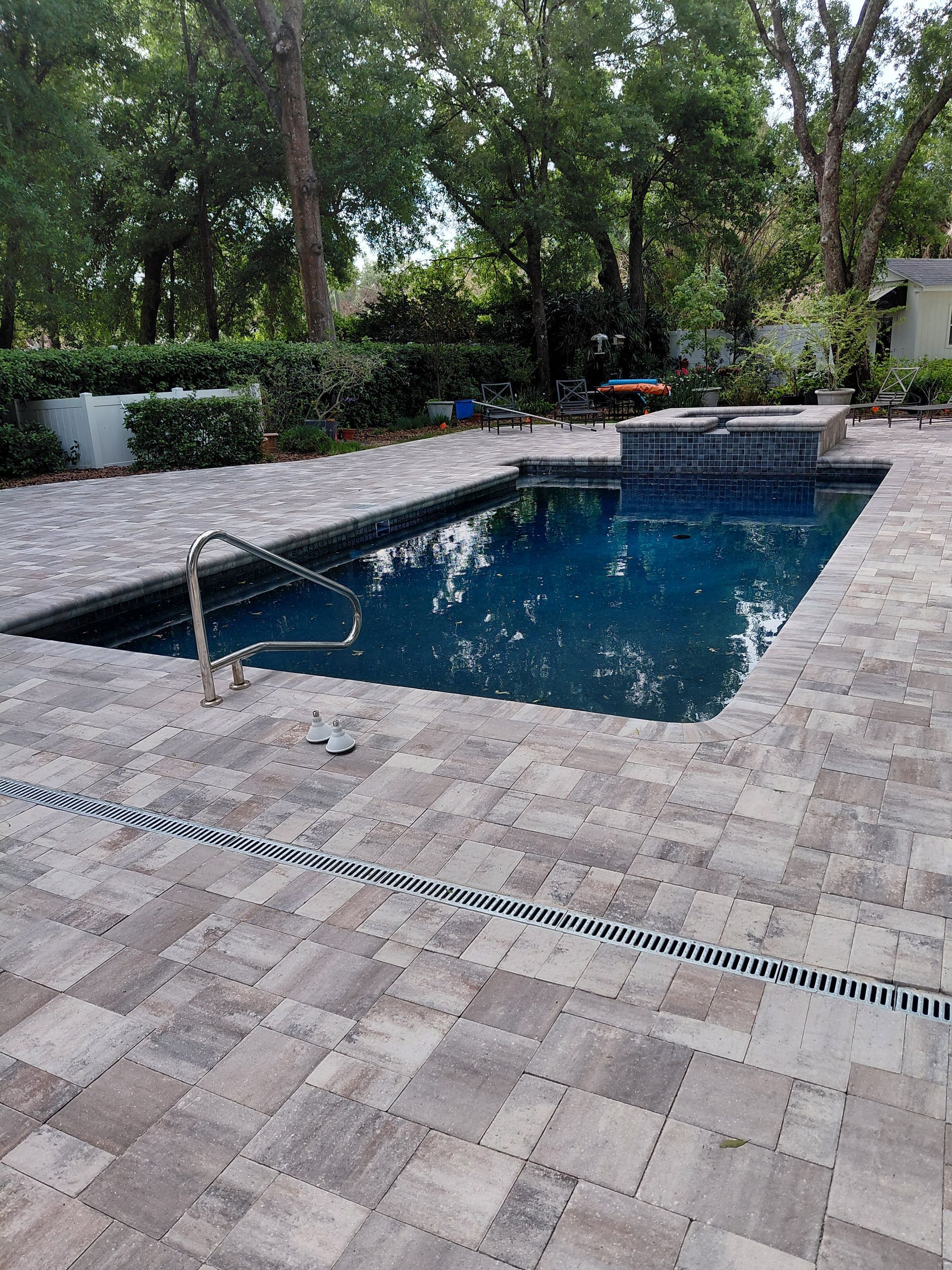
Pool deck installation requires base preparation that accommodates water runoff, prevents settling near the pool shell, and establishes slope that directs splash-out and rain away from the pool structure and toward drainage points. The process involves excavating to the proper depth after an elevation check, installing compacted base layers, setting edge restraints that define borders and contain the paver field, placing units in patterns that balance visual interest with slip resistance, and filling joints that resist washout from frequent wetting.
After the installation is finished, the pool area shows defined borders that separate the deck from landscape plantings, a surface that dries quickly and doesn't retain puddles, and a color and pattern scheme that either complements the pool finish or creates visual contrast. The deck provides stable footing for wet feet, stays cooler than poured concrete under direct sun, and maintains its appearance through Tampa Bay's extended outdoor season without the cracking or surface spalling common to monolithic concrete.
Bay Brick Pavers includes drainage slope verification, joint stabilization, and surface cleaning as part of the installation. The finished deck becomes a permanent feature that defines how the backyard pool area looks and functions, influencing furniture placement, traffic flow, and the overall usability of the outdoor space during Tampa's nine-month pool season.
Questions Before Starting Your Project
Pool deck projects involve decisions about material performance, layout priorities, and how the surface will handle the specific conditions around a backyard pool used frequently throughout the year.
What makes pavers a good choice for pool decks compared to poured concrete?
Pavers offer slip-resistant textures, cooler surface temperatures due to lighter color options and thermal properties, repairability if individual units crack or stain, and the ability to create patterns and borders that define different zones within the deck area.
How do you choose a paver color and texture for poolside use?
The decision balances heat reflection to keep the surface cooler underfoot, slip resistance when wet, color coordination with pool tile or coping, and how well the material shows or hides water spots, leaf stains, and the organic debris common around Tampa pools surrounded by landscaping.
What's involved in upgrading an existing pool deck?
Upgrades typically require removing the old surface, evaluating and correcting the base if settling or drainage issues exist, installing new pavers with proper slope and edge restraint, and integrating the new deck with existing coping or steps around the pool shell.
How does layout planning account for pool access and furniture placement?
Planning identifies entry and exit points, zones for lounge chairs that need stable footing and drainage, pathways between the pool and the house, and whether the deck will include steps, raised areas, or transitions to adjoining outdoor living spaces.
When is the best time to install a pool deck in Tampa?
Installation can proceed year-round, though dry months simplify base compaction and joint sand placement, and scheduling during pool off-season or after new pool construction completes allows uninterrupted access to the deck area once the project finishes.
Bay Brick Pavers evaluates your pool area layout, discusses material performance around water and sun exposure, and explains how pattern and color choices shape the finished appearance. Set up a consultation to explore paver pool deck options for your Tampa property.