
Surfaces Built from Base to Finish
Paver Installation in Tampa for properties requiring new outdoor hardscape or replacement of deteriorating surfaces
Proper paver installation begins below the visible surface, where base depth, compaction, and drainage slope determine whether the finished area remains stable through Florida and South Tampa's wet season and root activity from nearby trees. Bay Brick Pavers approaches each installation by evaluating site conditions, material options, and intended use—whether the project involves a driveway that must support vehicle loads, a patio designed for outdoor furniture and foot traffic, or a pool deck exposed to water and constant sun. The process moves through distinct phases: site assessment and layout, excavation to the required depth with an elevation check, base preparation and compaction, edge restraint installation, paver placement in the specified pattern, joint filling, and final surface cleaning.
Material selection includes concrete and travertine pavers in various colors and textures, clay brick for traditional appearance and compressive strength, interlocking units that resist shifting under lateral forces, and porcelain pavers that offer contemporary finishes and stain resistance. Each option performs differently under South Tampa's heat, UV exposure, and seasonal moisture, and the choice affects not only appearance but also surface temperature, slip resistance when wet, and color retention over years of use.
Request an on-site estimate to review your property layout and discuss material options suited to your project in Tampa, Lutz, Citrus Park, and surrounding areas.
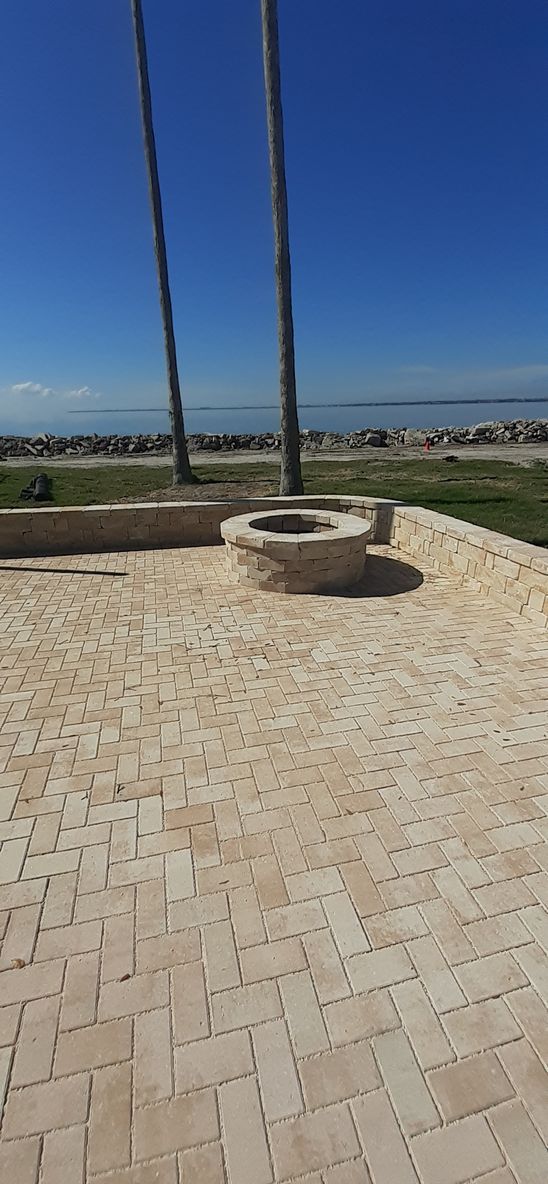
What You Notice Once Installation Is Finished
The installation begins with string lines and grade stakes that establish slope and define borders, followed by excavation that removes unstable soil and creates room for the compacted base layer—typically crushed stone compacted in lifts to create load-bearing support. Edge restraints, installed along borders before paver placement, prevent lateral movement that would otherwise cause pattern distortion and joint width changes over time. Pavers are set according to the planned pattern, cut to fit around obstacles and borders, and locked into place and activated with water misting to harden and resist erosion.
After completion, the outdoor area shows clean borders that separate hardscape from planting beds, a surface that sheds water toward drainage points without pooling, and a finished pattern that establishes visual order. Driveways allow vehicle access without tire rutting or surface deformation, patios create defined spaces for furniture arrangements, and walkways guide foot traffic along intentional routes that protect lawn areas and landscape plantings.
Bay Brick Pavers includes joint stabilization, edge restraint securing, and debris removal in the installation process. The finished surface reflects the color and pattern selections made during planning, becoming a permanent feature that either complements or contrasts with the home's exterior materials and landscape design.
Common Questions About This Service
Installation projects vary in complexity depending on site grading, soil conditions, and the scope of work required, and homeowners benefit from understanding what each phase accomplishes.
What happens during the site evaluation phase?
The assessment identifies existing slope and drainage patterns, locates underground utilities, an elevation check, notes soil conditions that affect base depth requirements, and determines whether tree roots or irrigation lines will affect excavation.
How deep does the base preparation need to be for a stable paver surface?
Base depth depends on the application—driveways supporting vehicles typically require eight to twelve inches of compacted aggregate, while patios and walkways may need six to eight inches, with adjustments based on native soil stability and drainage requirements specific to Tampa's clay and sandy soil mix.
What's the difference between concrete, travertine, clay, and porcelain pavers?
Concrete pavers are versatile, durable, and available in many colors and styles. Travertine offers a natural stone look and stays relatively cool underfoot, making it popular around pools. Clay pavers provide a classic appearance with rich, lasting color. Porcelain pavers are dense, low-maintenance, and highly resistant to moisture, stains, and fading.
How does pattern choice affect installation complexity and timeline?
Herringbone and basket weave patterns require more cutting and fitting than running bond or stack bond layouts, and circular or radial designs demand precise calculations and custom cuts that extend installation time but create distinctive visual effects.
What prevents pavers from shifting or separating after installation?
Edge restraints anchored along all borders contain lateral movement, compacted base layers distribute loads evenly, and polymeric sand in joints locks individual units together while allowing minor movement that accommodates temperature changes without cracking.
Bay Brick Pavers evaluates your site conditions, discusses material performance characteristics, and explains how layout and base preparation affect the finished surface. Schedule a property assessment to begin planning your Tampa paver installation.